Lorem ipsum dolor sit amet consectetur adipisicing elit. Minima incidunt eaque ab cumque, porro maxime autem sed.
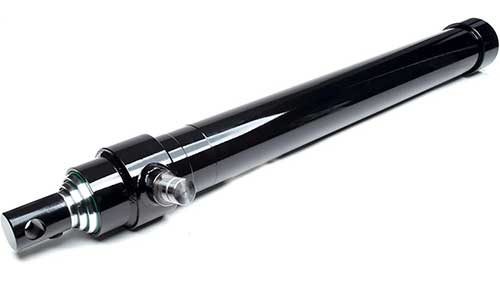
Telescopic hydraulic cylinder specifications vary widely as they are often custom-built for specific applications, but key parameters typically include:
Single-acting (uses gravity or external force for retraction) or double-acting (uses hydraulic pressure for both extension and retraction).
The number of nested tubes, typically ranging from 2 to 6 stages, which determines the ratio of extended to retracted length.
A sturdy shaft attached to the piston that extends out from one end of the cylinder, transmitting the linear force to the external load.
The total extended distance the cylinder travels, which can range from as short as 100mm to over 18m (18,000 mm) for specialized applications.
The internal diameter of the largest and subsequent tubes/sleeves (e.g., Ø25mm to Ø400mm or more), which, along with pressure, determines the lifting force.
The typical hydraulic pressure the cylinder is designed to handle, commonly ranging from 10-20 Mpa (around 100-200 bar, or 2,000-3,000 psi) up to 450 bar for high-pressure systems.
The minimum retracted length, which is significantly shorter than the extended length (often 20% to 40% of the total stroke) for compact installation.
How the cylinder is attached to the machinery (e.g., Clevis mounts, Trunnion mounts, Front Flange, Rear Flange).
The maximum weight or force the cylinder is rated to lift, which can be anywhere from a few tons to over 1000 tons for heavy industry.
The materials used for the body, sleeves, and plunger, typically high-strength carbon steel or stainless steel.
High-performance seals (e.g., from Parker, Hallite, Freudenberg) made of materials like Nitrile or Viton, suitable for specified temperature ranges and fluid media.
The environmental temperatures the cylinder can safely function within (e.g., -40°F to +235°F or -40°C to +113°C).
When ordering or specifying a telescopic hydraulic cylinder, the following information is typically required: